

Cold Rooms Built to Hold Temperature When It's 50°C Outside
Chillex designs, supplies, installs and commissions walk-in chillers, freezers and cold stores
across Dubai and the UAE — engineered around your product, your throughput and this climate.
One contract from heat load calculation to handover.
- check_circle Desert-rated equipment selected for 48–50°C ambient, not a 35°C European datasheet
- check_circle Built to Dubai Municipality & HACCP requirements — ≤5°C chillers, ≤−18°C freezers, with commissioning temperature validation
- check_circle Turnkey and accountable — design, panels, refrigeration, electrical, controls, testing and training under one contract
Request a Callback
Most Cold Rooms in the UAE Don't Fail. They Were Specified to Fail.
A cold room that struggles in August was usually broken on the drawing, not on the day it stopped cooling. Equipment gets picked from a catalogue, the heat load gets estimated instead of calculated, and the room performs beautifully in January — right up until the first 47°C week.
These are the faults we're called in to fix most often. Every one is avoidable at design stage, and every one is expensive after handover.
Condensers rated for 35°C
Most catalogue equipment is rated at 32–35°C ambient. Dubai routinely exceeds 45°C, and a plant-room roof can push local air past 50°C. Capacity collapses exactly when you need it.
Heat load estimated, not calculated
Panel transmission, product pull-down, door openings per hour, staff, lighting, packaging, forklifts and infiltration. Skip it and the room copes half empty and fails when full.
Panel thickness chosen by price
Chiller panel on a freezer room means permanent over-run, surface condensation and an energy bill nobody budgeted for. There's no clever way around the physics.
Vapour barrier ignored
In Gulf humidity, moisture drives relentlessly into the panel. Where the barrier is broken, insulation waterlogs and eventually rots from the inside. Invisible for two years, terminal in five.
Condensers fouled by dust
Gulf dust clogs condenser fins in weeks, not years. Blocked condenser means high head pressure, lost capacity, spiked energy use and shortened compressor life.
Doors & seals as an afterthought
Every opening pulls in warm, humid air. Without correct seals, heater tape and air curtains you get ice on the coil, water on the floor and defrost running far more often than it should.
Wrong defrost strategy
If defrost method, frequency and termination aren't matched to duty, the coil chokes, airflow drops, the room warms and the system fights itself.
Freezer floors without insulation
A freezer on an uninsulated slab pulls heat from the ground, causes frost heave and cracks the floor. Retrofitting means emptying the room.
Electrical & control shortcuts
Undersized cabling, no phase-failure protection, no high-temperature alarm, no data logging. You find out about a failure when you open the door — after the stock is lost.
You don't get a second chance at a cold room's design. Panels, floors, drainage and refrigerant lines are all buried by handover. Getting the calculation right before anything is ordered is the cheapest engineering you'll ever buy.
Cold Storage for Every Requirement
"Cold room" covers half a dozen very different machines. We start from what's going in the room, not from what's in the warehouse.
| Room type | Temperature range | Panel thickness | Ideal application |
|---|---|---|---|
| Cool room | +8°C to +15°C | 60–80 mm PU/PIR | Dry goods, chocolate, wine, packaging |
| Chiller room | 0°C to +5°C | 80–100 mm PU/PIR | Fresh produce, dairy, pharma, prepared meals |
| Freezer room | −18°C to −25°C | 120–150 mm PU/PIR | Frozen meat, seafood, ice cream |
| Blast freezer | −35°C to −40°C | 150–200 mm PU/PIR | Rapid freezing, food processing |
| High-humidity room | +2°C to +5°C, 90–95% RH | 80–100 mm PU/PIR | Cut flowers, leafy produce |
| Preparation area | +10°C to +15°C | 60–80 mm PU/PIR | Butchery, sorting, packing |
Everything in a Chillex Cold Room Installation
Comparing cold room quotes is difficult because two suppliers can quote the same room and mean completely different things. Here is exactly what we include — so you can hold every other quotation against it.
Engineering & design
- Site survey and dimensional check
- Full heat load calculation for your product, throughput and door usage
- Layout and general arrangement drawings
- Refrigeration system design and equipment selection
- Electrical and control design
- Documented design conditions — you see what we sized it against
Insulated envelope
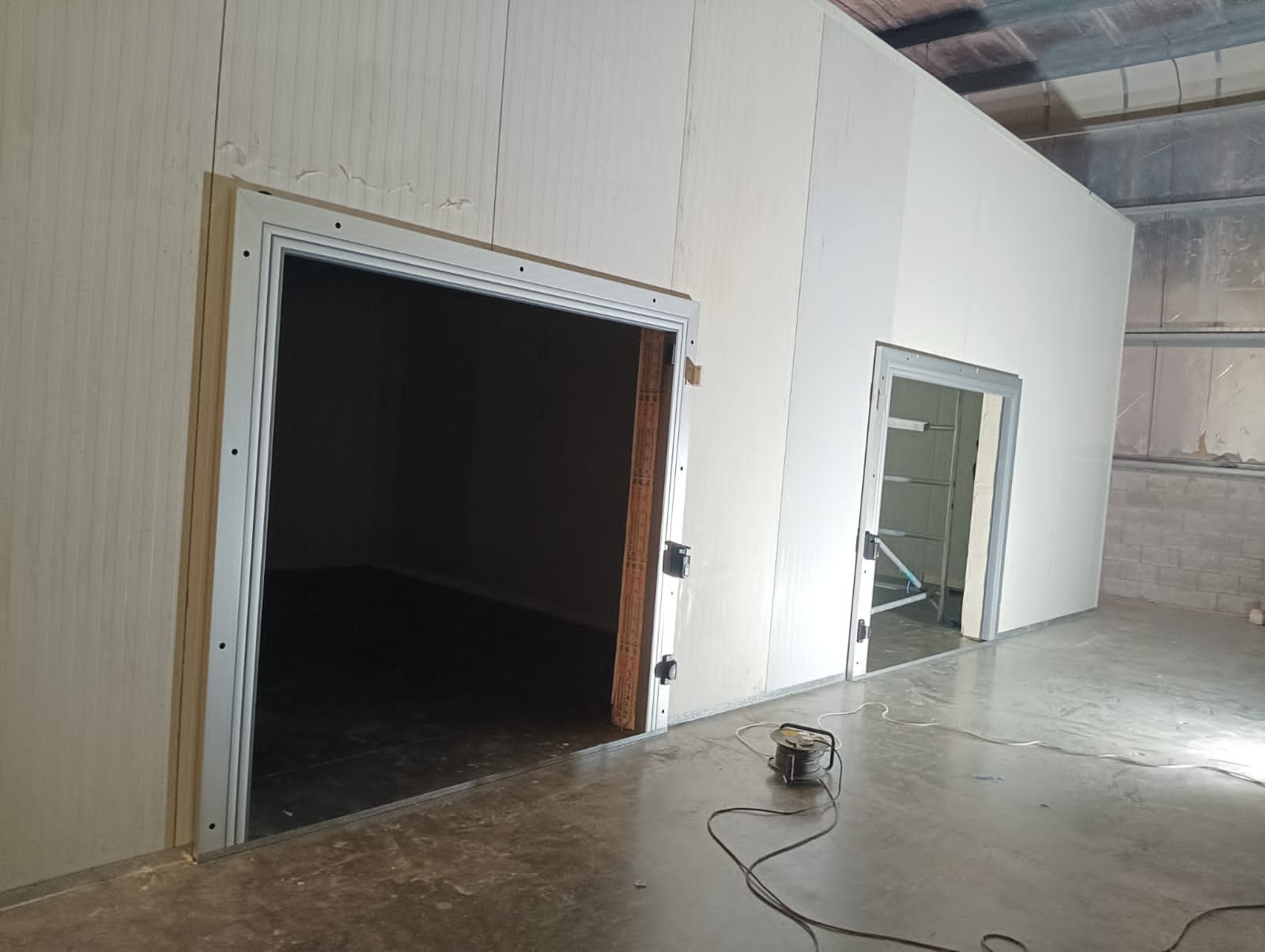
- PU / PIR insulated panels, thickness matched to duty
- Camlock jointing with continuous vapour seal
- Insulated floor panels or screed with frost protection for freezers
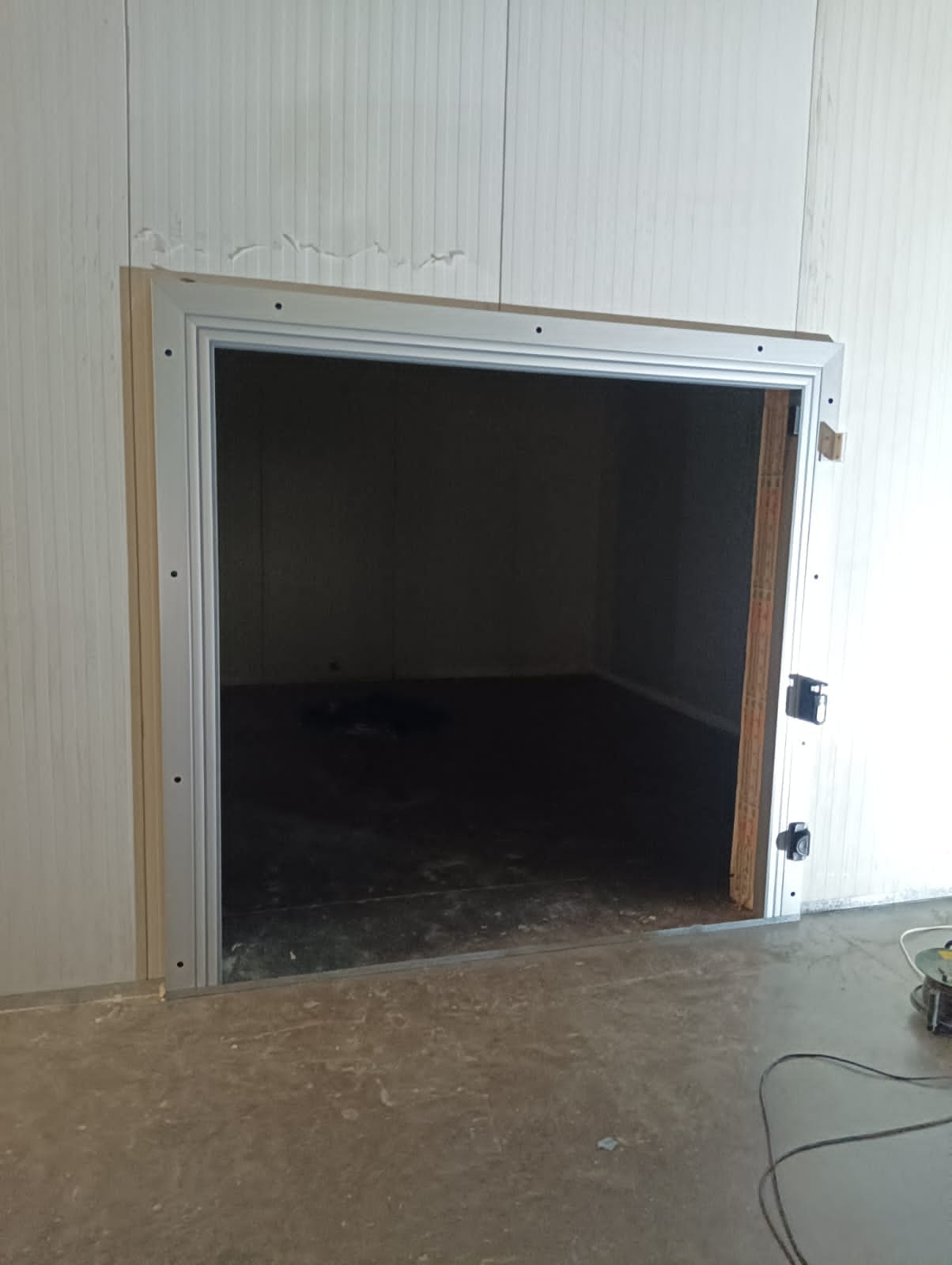
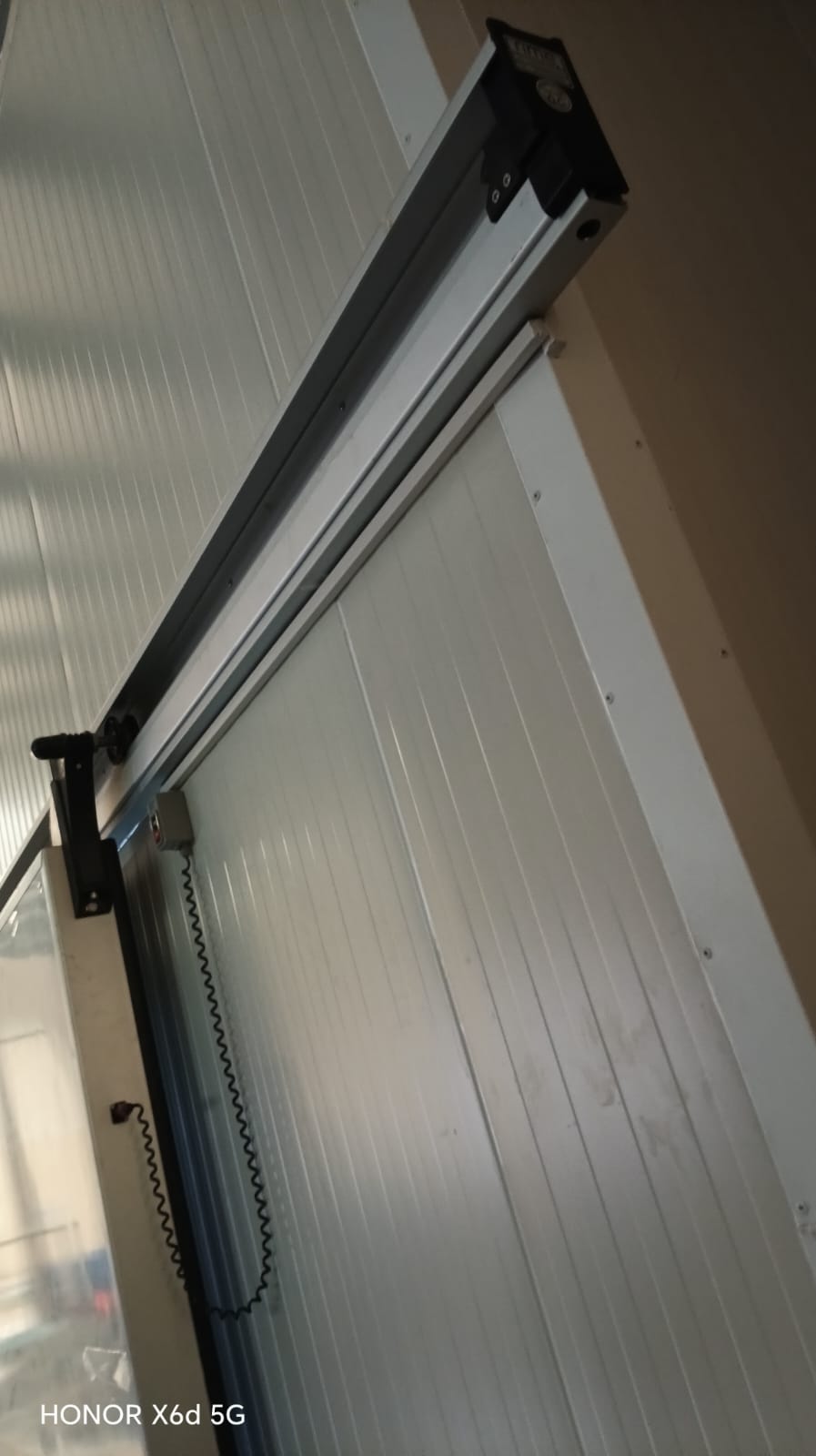
- Insulated hinged or sliding door with heater tape and internal safety release
- Strip curtains or air curtain at high-traffic openings
- Pressure relief valve on freezer rooms
- Corner protection and kick plates where forklifts operate
- Hygienic food-grade panel finish and sealed joints
Refrigeration
- Desert-rated condensing unit — air or water cooled
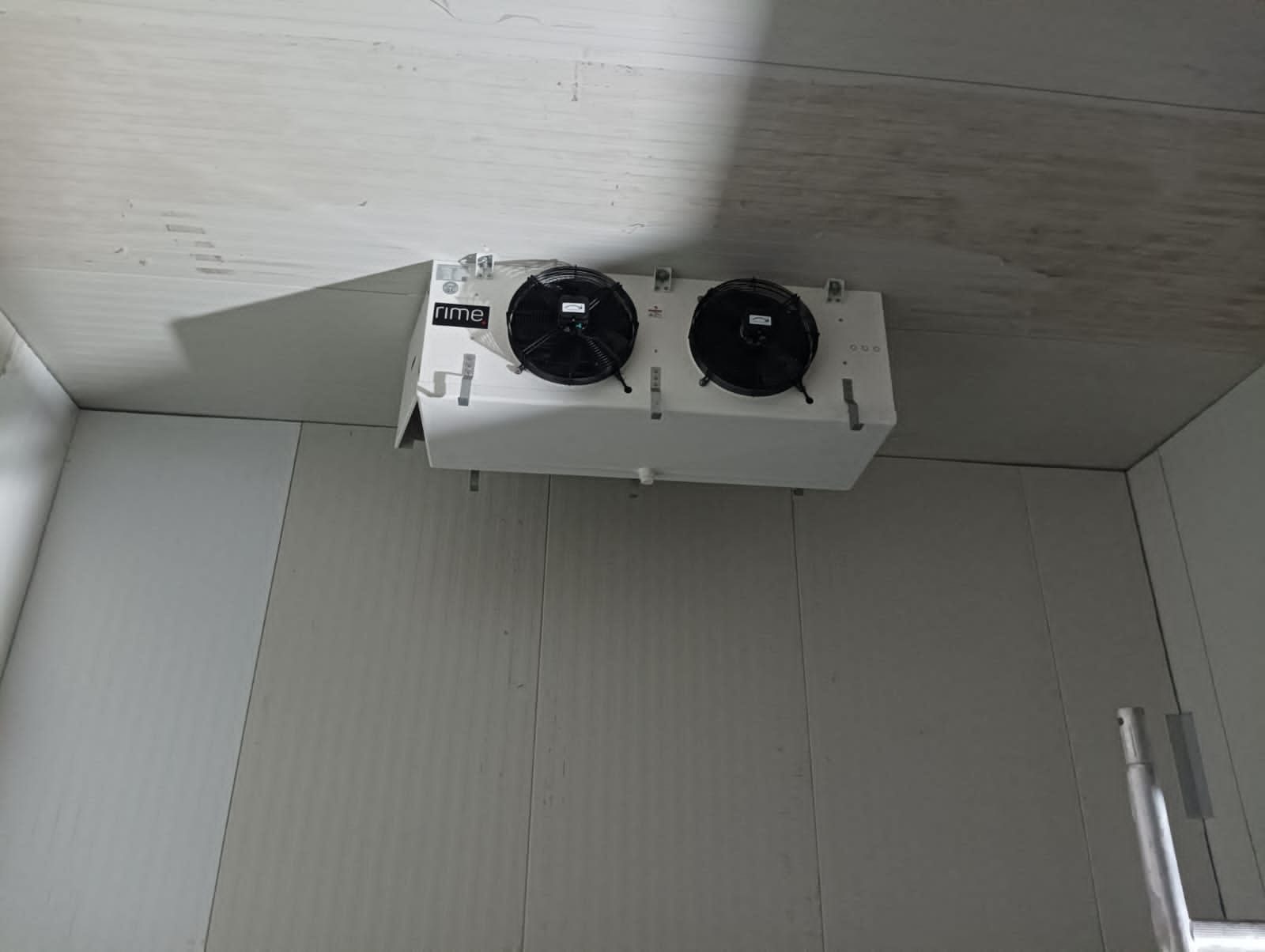
- Unit cooler sized and positioned for even air distribution
- Refrigerant pipework, insulation and cladding
- Correct defrost system for the application
- Drain line with trace heating and trap on freezers
- Refrigerant charge, leak test and pressure test
- Steel support frames and equipment platforms, fabricated in-house
Electrical & controls
- Electrical control panel with all inline components
- Power cabling, isolators and phase-failure protection
- Digital temperature controller and external display
- High and low temperature alarms
- IP-rated, low-temperature internal lighting with door switch
- Optional data logging and remote / SMS monitoring
Handover
- Testing, commissioning and pull-down verification
- Written commissioning and temperature validation report for your DM / HACCP file
- Operator training for your team
- O&M manual, drawings and equipment documentation
- Optional annual maintenance contract with 24/7 breakdown cover
Get this scope quoted
Free survey, full heat load calculation, and a fixed price you can compare line by line.
Built to Pass Inspection — and Documented to Prove It
Dubai Municipality requires chilled high-risk food to be held at 5°C or below and frozen food at −18°C or below, and expects facilities handling perishables to operate a HACCP-based food safety management system with records available for inspection.
A cold room that "usually holds temperature" is not the same as a cold room you can evidence. We build for the standard and hand you the paperwork.
- Designed to the required holding temperature, with margin for real-world door usage
- Commissioning temperature validation report — documented pull-down and hold performance
- Calibrated temperature display and alarms, with optional continuous data logging
- Hygienic construction — food-grade finish, sealed joints, no dirt traps
- O&M documentation and maintenance schedule for your food safety file
From First Call to First Pallet
Seven stages, with realistic durations — so you can plan your operation around it instead of guessing.
-
01
1–3 days
Site survey & requirement capture
We visit, measure, and ask what the system actually has to do: product, temperature, throughput, door openings, power available, expansion plans. Free and no obligation.
-
02
3–7 days
Heat load calculation, design & proposal
Full load calculation, equipment selection, layout drawings, electrical and control design, and a detailed fixed-price proposal showing the design conditions we sized against.
-
03
2–4 weeks
Approval, procurement & fabrication
Panel production, equipment procurement, steel frame fabrication and panel build. Usually the longest stage, and the one most affected by non-standard sizes.
-
04
3–7 days
Site preparation & delivery
Civil works, floor preparation, power provision and drainage confirmed and ready. We coordinate this with you so materials don't land on an unprepared site.
-
05
3 days – 3 weeks
Installation
Panel erection, doors, refrigeration installation, pipework, insulation, electrical and controls. A standard walk-in on a prepared site can be up in under a week.
-
06
3–5 days
Testing & commissioning
Pressure and leak testing, refrigerant charging, controls configuration, defrost setup, pull-down test and temperature hold verification against design.
-
07
1–2 days
Handover & training
Operator training, O&M manual, drawings, warranty documentation and the commissioning temperature validation report for your compliance file.
Typical total: 4 to 12 weeks
Small standard walk-in rooms on a prepared site sit at the fast end. Large, multi-room, pharmaceutical or heavily customised builds sit at the slow end. We give you a project-specific programme with the quotation — not a guess.
What Moves Your Number
Cold room pricing varies enormously with duty and site conditions, so a headline figure would mislead you more than it helped. Here's what actually drives the cost — and we give a fixed price after the survey, not a range you have to gamble on.
- Temperature. A freezer costs materially more than a chiller. A blast freezer costs more again.
- Size and shape. Non-standard dimensions mean non-standard panels.
- Panel thickness. Driven by duty, not by budget.
- Refrigeration selection. Compressor type and efficiency affect both the invoice and the next decade of DEWA bills.
- Doors. Hinged, sliding or automatic — each is a different cost.
- Electrical infrastructure. Whether three-phase power already exists at the location.
- Controls and monitoring. Basic controller versus full data logging and remote alarms.
- Site conditions. Access, floor preparation, civil works, working at height, and whether you're operating around live production.
- Compliance requirements. Pharmaceutical validation and mapping add a documented qualification phase.
A word on cheap quotes
The gap between a low quote and a properly engineered one is almost always in the parts you can't see: panel thickness, condensing unit rating, vapour sealing, floor insulation and defrost design. Those are also the parts that are impossible to fix later without emptying the room. Ask any supplier for their heat load calculation and their design ambient — the answer tells you everything.
Your Questions Answered
Something not covered? Call +971 50 988 6428 — answered 24/7.
Book a Free SurveyGet Your Cold Room Priced Properly
Send us your site details and we'll arrange a free survey. You'll get a full heat load calculation, a scope of works you can compare line by line against any other quote, and a fixed price.
No obligation to proceed.