

Repair It, Retrofit It, or Replace It? We'll Tell You Which — With Numbers.
Chillex designs, installs, repairs and maintains central chilled water systems across Dubai and
the UAE — air-cooled and water-cooled chillers, pumps, cooling towers, AHUs, FAHUs and fan coil
units. We assess before we quote, and we'll tell you when repairing is the better commercial
answer.
- check_circleFree chiller assessment and efficiency report — measured performance against nameplate, with a repair/retrofit/replace recommendation and the numbers behind it
- check_circleAll types and all major brands — reciprocating, centrifugal, screw, scroll and absorption; air-cooled and water-cooled
- check_circleFull chilled water scope — chillers, pumps, cooling towers, pressurisation, AHU/FAHU/FCU, pipework, balancing and commissioning
Request a Callback
Repair, Retrofit or Replace — How to Tell
Most contractors recommend whatever they sell. The right answer depends on the age of the machine, its mechanical condition, its measured efficiency, whether spares and controls are still supported, and what refrigerant it runs on. Here's the framework we use.
Repair
Fix the fault, keep running
This is you if:
- Under roughly 15 years old and mechanically sound
- The fault is discrete — a leak, a valve, a control, a fouled condenser
- Measured efficiency is still reasonably close to nameplate
- Spares and control support remain available
- Not yet due for capital replacement in your plan
Typical downtime: hours to days.
Retrofit
Modernise the machine you have
This is you if:
- Mechanically sound but running well below nameplate efficiency
- 15–25 years old with documented maintenance history
- Main losses are in controls, heat exchangers, motors or absent VSD
- Capital budget for full replacement isn't available this cycle
- Downtime for a full plant replacement isn't acceptable
The commercial case:
Retrofits typically cost 30–50% of a full replacement, deliver 15–25% efficiency improvement, pay back in 2–5 years, and can extend plant life by 15–20 years.
Replace
New plant
This is you if:
- Past 20 years, or past 25 with a poor maintenance record
- Efficiency has degraded materially and retrofit can't recover it
- Controls are obsolete and no longer supported
- It runs a phased-out or restricted refrigerant
- Repair costs are escalating year on year
- Reliability now threatens the operation
Modern chillers deliver 20–40% better efficiency than units built 10–15 years ago.
Our commitment: the assessment report tells you which of these three applies, with the measurements behind it. If the answer is "repair it and revisit in three years," that's what the report will say.
The Cost of Leaving It Alone
Chiller efficiency degrades quietly. There's no alarm for it. The machine still makes cold water — it just takes progressively more electricity to do it, and cooling is roughly 60–70% of a Dubai building's summer electricity consumption.
Efficiency an ageing chiller typically loses across 15–20 years of operation.
Efficiency advantage modern chillers hold over units built 10–15 years ago.
Typical payback on a chiller retrofit. Full replacement typically pays back in 7–12 years on energy alone.
Annual saving achieved when 15 chillers across 11 JAFZA facilities were replaced with inverter units — around 3.02 million kWh a year.
Etihad ESCO programme, Dubai — cited as an industry example, not a Chillex project.
Electricity saved over six years by the DEWA headquarters chilled water retrofit using magnetic-bearing chillers.
Etihad ESCO programme.
Buildings targeted by Etihad ESCO for energy retrofit in Dubai — with performance contracting and project finance structures built to fund this kind of work.
What this looks like on your plant
A chiller drawing 0.90 kW per ton when its nameplate says 0.55 is consuming roughly 60% more electricity than it should for the same cooling. On a mid-size plant running through a Dubai summer, that gap is a large, entirely invisible line in your DEWA bill.
The assessment measures your actual kW/ton. Until someone does, the number is a guess.
 Repair
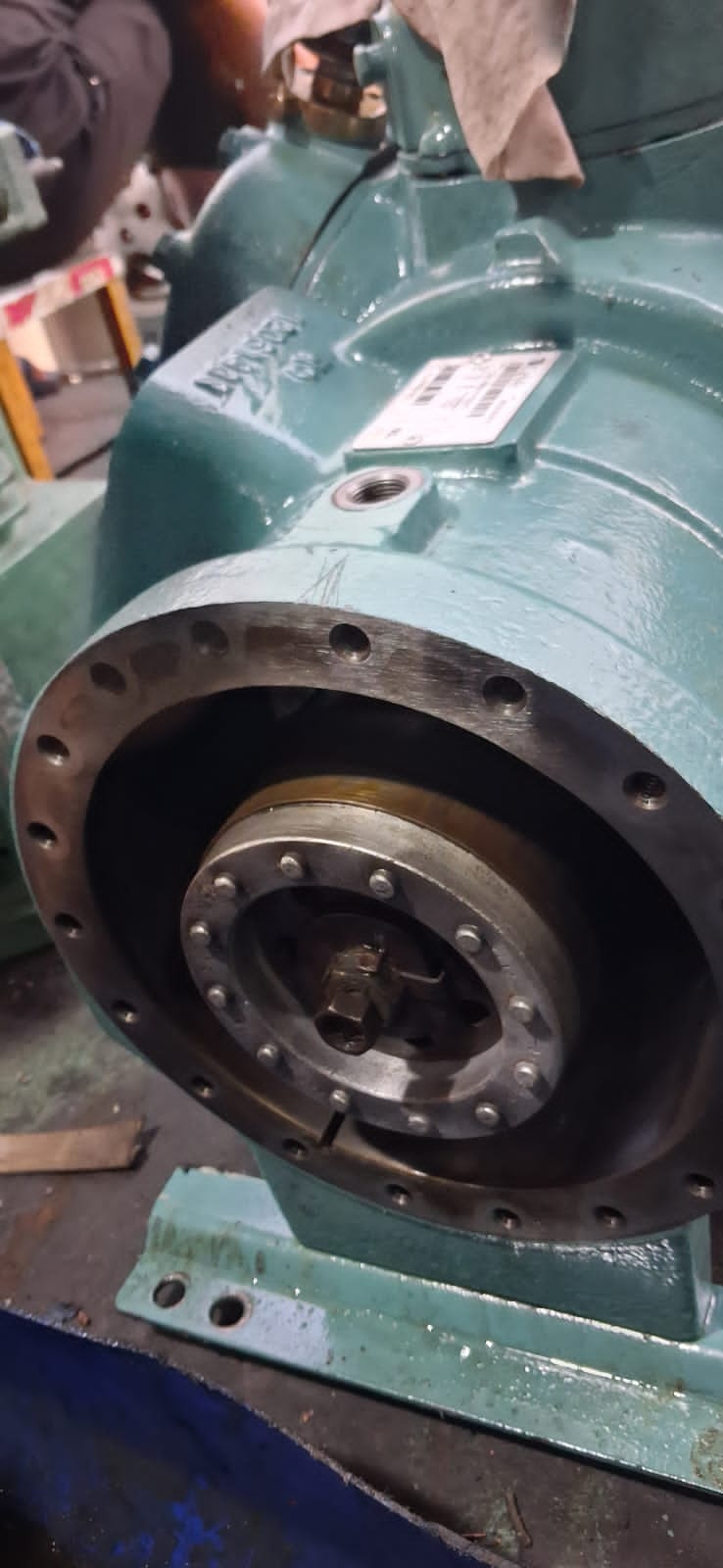
Chiller Repair & Fault Diagnosis
We repair air-cooled and water-cooled chillers of all types and all major brands, including plant we didn't install. Diagnosis comes first — we won't quote a moderate or major repair over the phone, because anyone who does is guessing with your money.
Common faults we resolve
- Refrigerant leaks, loss of charge and low-charge running
- Compressor faults — valve, bearing, motor overload, high discharge temperature
- High head pressure and condenser fouling
- Evaporator fouling and approach temperature drift
- Chilled water pump failure, no flow, flow switch trips
- Cooling tower faults and water treatment issues
- Electrical panel, starter, contactor and VSD faults
- Control and BMS faults, sensor drift, nuisance tripping
- Short-cycling and repeated safety trips
- Oil management and lubrication faults
- Vibration, noise and alignment problems
Chiller down right now? Our emergency line runs 24/7 — +971 50 988 6428.
 Installation
New & Replacement Installations
Whether you're replacing failed plant, expanding capacity, or fitting out a new facility, we deliver the whole scope — not just the machine.
- Cooling load calculation and capacity verification — we check the load rather than matching the nameplate of whatever is currently installed
- Equipment selection and efficiency comparison, with lifecycle cost, not just purchase price
- Plant room layout, access and service clearance design
- Structural support, plinths, anti-vibration mounts and steel fabrication
- Rigging, lifting, cranage and placement — including removal of the old plant
- Chilled water pipework, valves, insulation and cladding
- Chilled water pumps and headers
- Cooling towers, condenser water systems and make-up water
- Pressurisation units and expansion arrangements
- Electrical supply, panels, starters and VSDs
- Controls, sensors and BMS integration
- Flushing, chemical cleaning and system fill
- Water balancing across the distribution system
- Testing, commissioning and performance verification against design
- O&M documentation, drawings and operator training
On phased replacement. Many buildings can't take their cooling offline. We routinely plan changeovers in phases — temporary cooling, sequenced isolation, or out-of-season execution — so the building keeps running.
The Whole System, Not Just the Chiller
Most "chiller problems" aren't in the chiller. Poor flow, unbalanced distribution, fouled coils, failed pressurisation and bad control settings all present as "the building isn't cooling."
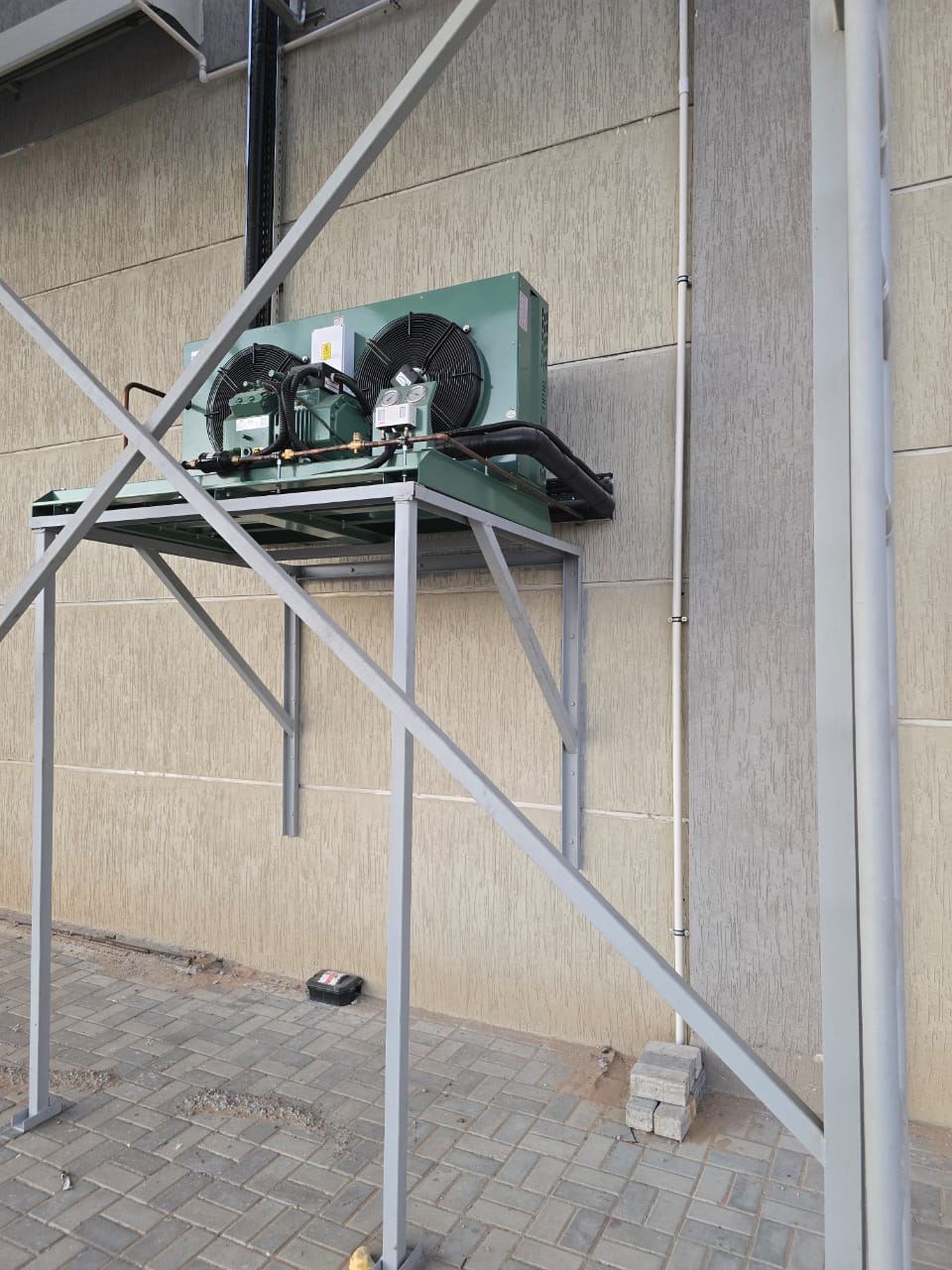
Plant room
- New and upgraded chiller installations
- Chilled water pumps — supply, replacement, repair
- Pressurisation units
- Cooling tower installation and service
- Make-up water systems
- Chilled water pipework and headers
- Pipeline cladding and insulation
- Plant room electrical and controls
Distribution & terminal
- FAHU, AHU and fan coil unit supply and installation
- GI and MS ductwork
- Water balancing across the system
- Airflow balancing and distribution correction
- Valve, actuator and control replacement
Diagnostics & verification
- Chiller system checkups and inspections
- Chiller pump pressure and flow verification
- Refrigeration performance measurement
- Electrical circuit testing
- Refrigerant leak detection and repair
- Retro-commissioning — bringing an existing system back to designed performance
On retro-commissioning. If your building has never quite performed as designed, or performance has drifted since handover, retro-commissioning is usually the cheapest intervention available. It frequently costs less than the energy it recovers in the first year.
You May Not Need the Capital Budget
Dubai has a funding infrastructure built specifically for this kind of work. Etihad ESCO, a DEWA venture, exists to drive energy retrofits across the emirate — targeting more than 30,000 buildings — and to enable performance contracting and access to project finance, where the work is funded against the energy savings it produces.
Chiller replacement and chilled water retrofit are exactly the scopes these mechanisms were designed for. Documented Dubai projects under the programme include a JAFZA chiller replacement saving over AED 1.3 million a year and the DEWA headquarters retrofit saving around 35.2 GWh across six years.
What this means for you: if the barrier is capital rather than the business case, there may be a route that doesn't require it. We can help you structure the technical case — measured baseline, projected savings, and verified performance — that any performance-contracting or financing route will require.
Start With a Free AssessmentChillers We Work On
By type
Air-cooled · Water-cooled · Reciprocating · Centrifugal · Screw · Scroll · Absorption · Magnetic-bearing / oil-free · Inverter and VSD-equipped
By brand
All major manufacturers, including Carrier, York, Trane, Daikin, Climaveneta, McQuay, Dunham-Bush and others.
How a Chiller Project Runs
- 01Free assessment — 1 day on site. We survey the plant, take measurements, review maintenance and energy history, and check the actual cooling load against installed capacity.
- 02Efficiency report & recommendation — 5–10 days. Measured performance against nameplate, condition assessment, and a clear repair/retrofit/replace recommendation with indicative costs and payback.
- 03Design & detailed proposal. Equipment selection, plant room layout, electrical and control design, phasing plan, and a fixed-price scope you can compare line by line.
- 04Procurement & fabrication. Equipment lead times are the main variable on chiller projects and are confirmed at proposal stage — never assumed.
- 05Installation. Rigging, removal of old plant, placement, pipework, electrical, controls — phased around your operation where the building can't go offline.
- 06Flushing, commissioning & balancing. System cleaning, fill, water balancing, controls configuration and performance verification against design.
- 07Handover. Documentation, drawings, training and maintenance arrangements.
Find Out What Your Chiller Is Actually Doing
A free assessment and written efficiency report. We measure the plant, compare it against what it was designed to deliver, and tell you plainly whether to repair, retrofit or replace.
No obligation. You keep the report either way.