

Dubai Requires You to Cool Food from 60°C to 5°C in Six Hours. A Walk-In Chiller Won't Do It.
Chillex supplies, installs, commissions and services blast chilling and blast freezing systems
across Dubai and the UAE — from undercounter cabinets and roll-in units for commercial kitchens
through to blast freezer rooms and purpose-built inline tunnels for food production plants.
- check_circleBuilt around the Dubai Municipality cooling rule — 60°C to 21°C in 2 hours, then to 5°C within 4 more, with digital logging for your HACCP file
- check_circleSized on your actual load — kilograms, product type and cycle time, not tray count
- check_circleCabinet to full plant — we supply equipment and we engineer complete systems, including inline tunnel freezing
Request a Callback
What Dubai Municipality Actually Requires
The two-stage cooling rule
Stage 1
60°C → 21°C
within 2 hours
Stage 2
21°C → 5°C
within a further 4 hours
Six hours total, with the first two being the critical ones.
The danger zone is 5°C to 60°C — the band where bacteria multiply fastest. The whole purpose of the rule is to move food through that band quickly enough that growth stays controlled.
The Dubai Food Code also sets cooking and reheating at 75°C, hot holding at 60°C or above, chilled storage at 5°C or below, and frozen storage at −18°C or below.
A legal matter, not best practice
The UAE Food Safety Law (Federal Law No. 10 of 2015), together with Dubai Municipality and ADAFSA guidance, requires commercial food businesses to operate HACCP-based cooling controls with records available for inspection.
Ambient cooling and walk-in chillers cannot reliably achieve stage one. A blast chiller can take cooked food to +3°C core inside 90 minutes — with a logged record to prove it.
Putting Hot Food in the Walk-In Causes Three Problems, Not One
It's the most common cooling shortcut in UAE kitchens, and it's understandable — the cold room is right there. But it fails on three fronts at once.
It doesn't meet the cooling requirement
A walk-in chiller is designed to hold product at temperature, not to pull down hot food. Its refrigeration capacity is sized for maintaining a steady state with modest door traffic. Load it with hot trays and it will take far longer than two hours to get through stage one — which means the cooling log won't pass scrutiny.
It puts everything else in the room at risk
Introducing a large heat load raises the temperature of the whole room. Every other item stored in there — raw materials, prepared product, dairy — drifts upward while the plant fights to recover. One tray of hot food can create a temperature excursion across your entire chilled stock.
It damages the refrigeration plant
The system runs continuously at high load, condensing pressure rises, the coil ices, defrost cycles multiply, and compressor life shortens. You pay for it twice — once in electricity, again in a shortened equipment life and eventual breakdown.
The fix is not a bigger cold room. It's a machine designed for pull-down rather than holding. Different duty, different equipment.
Blast Chilling or Blast Freezing — Which Do You Need?
| Blast Chiller | Blast Freezer | |
|---|---|---|
| Target core temperature | approx. +3°C | approx. −18°C |
| Cycle time | typically within 90 minutes | typically around 4 hours |
| Operating air temperature | around −20°C to −25°C | around −35°C to −40°C |
| What it's for | Daily cook-chill production, HACCP cooling compliance | Long-term frozen storage, product preservation, stock building |
| Typical users | Restaurants, hotels, central and cloud kitchens, caterers, bakeries | Seafood and meat processors, ready-meal producers, ice cream, bakeries freezing dough |
| Insulation | Heavier than a standard chiller | Heaviest specification — typically 150–200 mm on rooms |
| Commercial benefit | Compliance, shelf life, batch cooking efficiency | Product quality — rapid freezing forms smaller ice crystals, so less cell damage, less drip loss, better texture on thaw |
Many operations need both. Combination units run either cycle, and a properly designed production flow often uses blast chilling for daily service and blast freezing for stock and longer-life product.
From a Countertop Cabinet to a Production Tunnel
Undercounter & countertop
Small kitchens, prep areas, patisserie and dessert work. Fits under a bench where floor space is at a premium.
Best for: small restaurants, cafés, patisseries.
Reach-in cabinets
The standard commercial format — GN or bakery tray compatible, floor-standing, with digital controls and probe.
Typical capacity: around 10–40 kg per cycle.
Roll-in / trolley units
Load a full trolley straight from the oven — no double handling, no decanting hot product.
Best for: central production kitchens, catering, banqueting, bakeries.
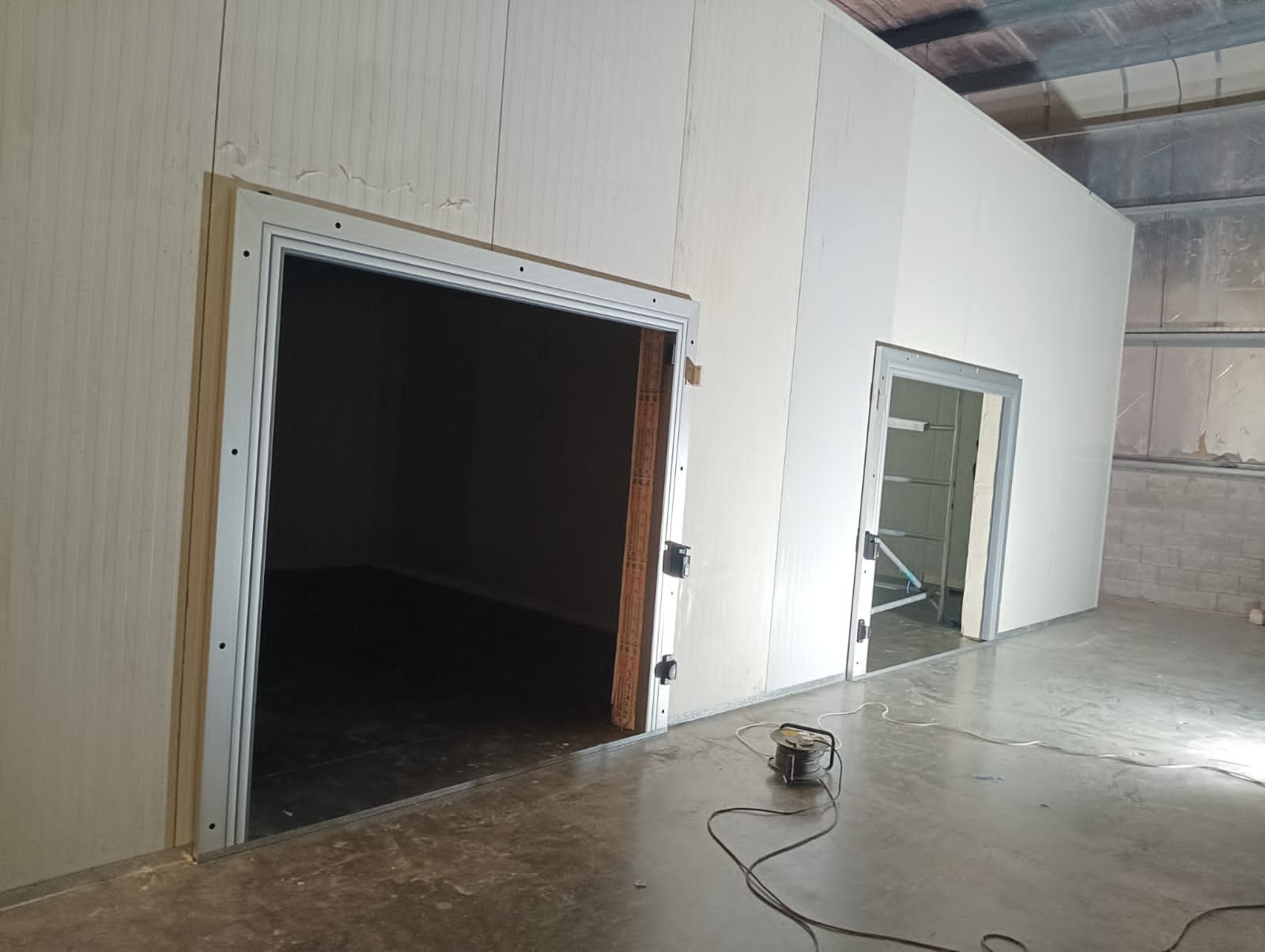
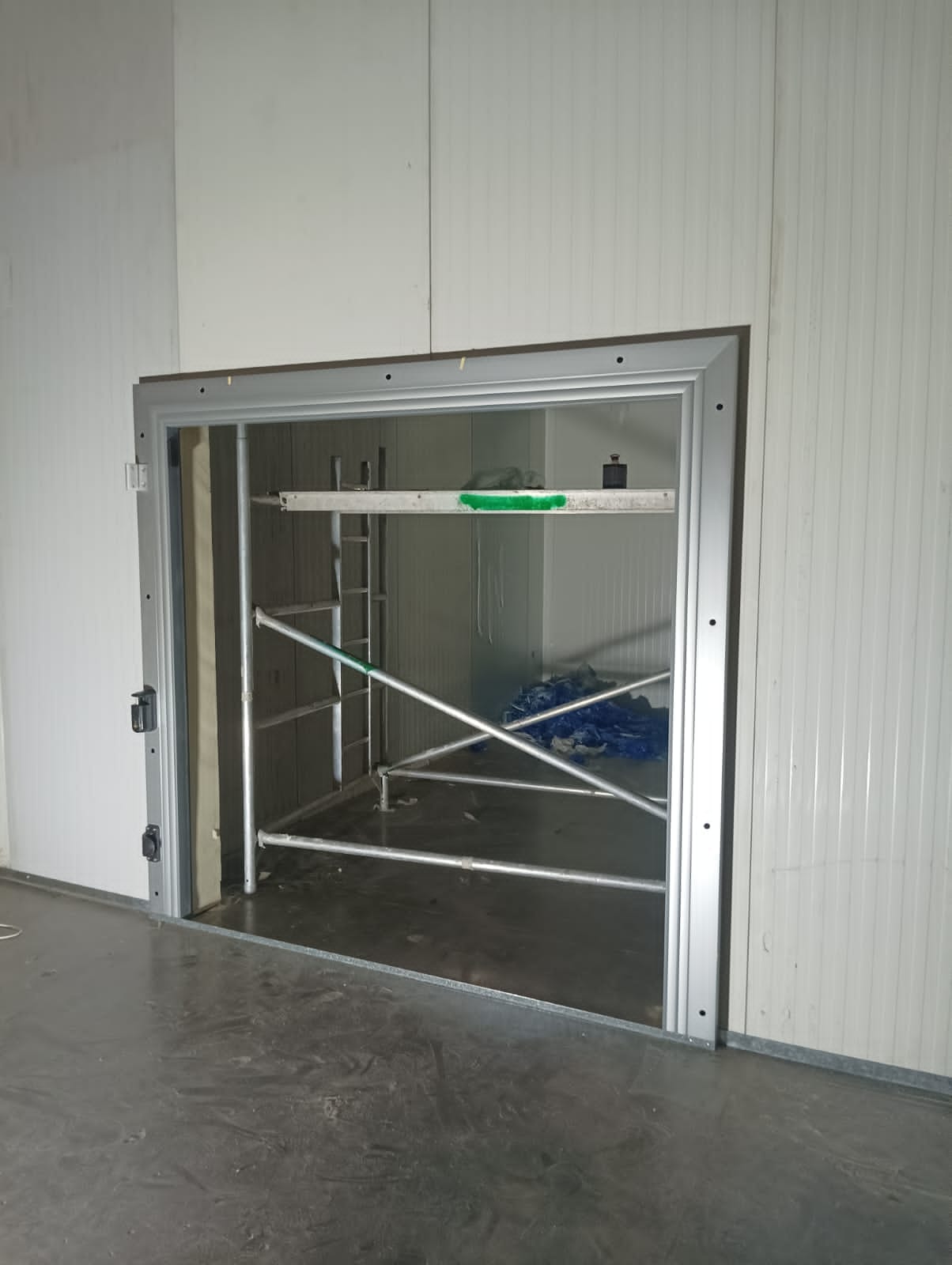
Blast chiller & freezer rooms
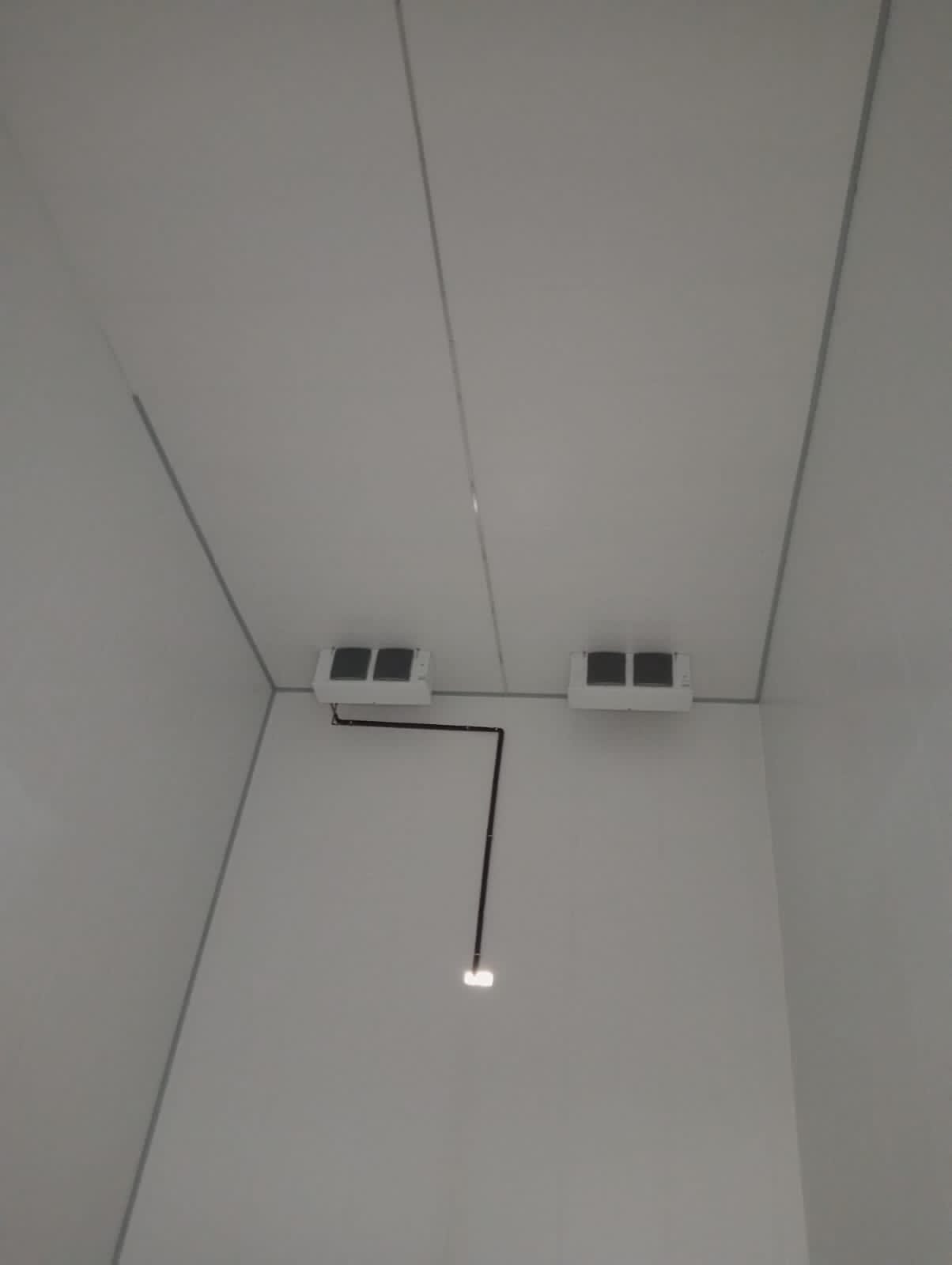
Walk-in scale, built in insulated panel with high-velocity air distribution and heavy-duty refrigeration. Sized to your batch volume rather than to a catalogue.
Typical capacity: 60 kg per cycle and well beyond.
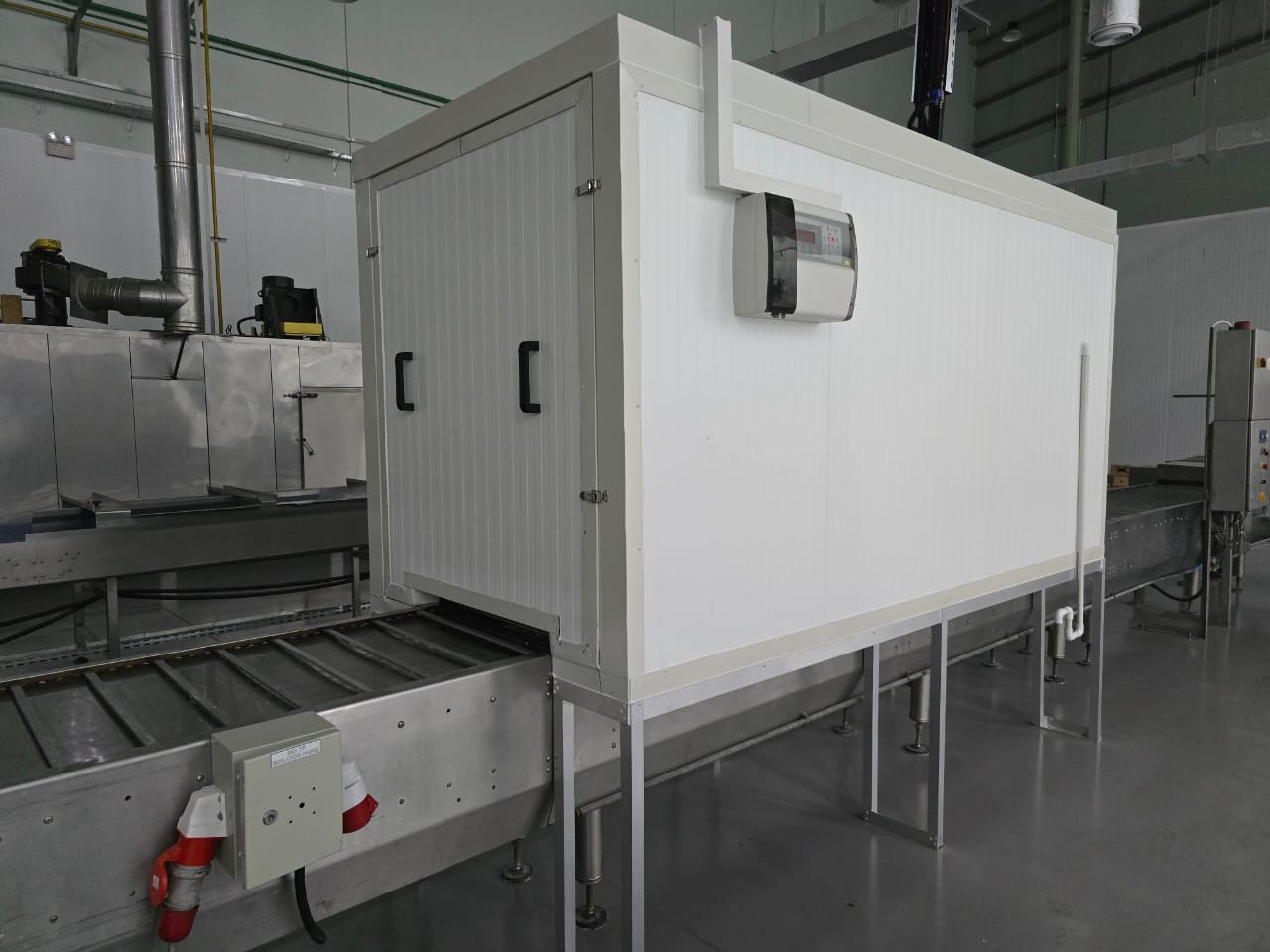
Inline & tunnel freezing systems
Purpose-built cooling and freezing integrated directly into a production line — product enters at one end on the conveyor and exits chilled or frozen. No batch handling, no bottleneck between processing and packing.
Best for: continuous-flow food production — ready meals, bakery, seafood, poultry, snacks.
This is engineering, not equipment supply. It's what separates us from a catalogue.
Walk-in blast rooms are built the same way as our cold stores — insulated panel construction, engineered air distribution and heavy-duty refrigeration, sized to your batch rather than to a catalogue.
Why Most Blast Chillers Are the Wrong Size
The most common specification error in this market is choosing a unit by tray count rather than by what actually determines performance: weight, product type and required cycle time.
Twenty trays of thin, high-surface-area product and twenty trays of dense, deep product are completely different thermal loads. A unit that handles one will fail the cooling test on the other — and the failure only shows up when a probe goes in.
What a proper sizing assessment considers
- Batch weight — actual kilograms per cycle, not tray slots
- Product type and density — a tray of rice behaves nothing like a tray of grilled vegetables
- Portion depth and container — depth drives core cooling time more than almost anything else
- Entry temperature — straight from the oven, or partially cooled
- Required cycle time — and how many cycles per shift you need
- Production schedule — peak simultaneous load, not daily average
- Growth — undersizing for today's volume is the second most common mistake we correct
- Ambient conditions — Dubai kitchens and plant rooms regularly exceed 40°C
- Air distribution — even airflow across every tray position; dead spots fail the probe test in the corners
We assess before we quote. If a cabinet is genuinely enough for you, we'll say so — that's a smaller sale for us and the right answer for you.
Proving It, Not Just Doing It
An inspector doesn't ask whether you cool food properly. They ask you to show the records.
- Digital temperature logging of each cooling cycle, retained for your HACCP file
- Core probe — with correct placement in the thickest part of the product, and training for your team
- Cycle records showing start temperature, end temperature and elapsed time
- Alarms for cycles that fail to complete within target
- Commissioning validation report — documented proof at handover that the unit achieves the required pull-down with your actual product
A common failure at inspection isn't the equipment — it's the probe
Placed too shallow, or in the wrong part of the tray, it reports a pass while the core of the product is still in the danger zone. We train your team on this at handover.
Industrial Blast Freezing & Inline Systems
For food production plants, batch cabinets stop making sense. Throughput, handling and floor space all point toward systems built into the process rather than sitting beside it.
What we design and build
- Blast freezer rooms — insulated panel construction with high-velocity air distribution, trolley or rack loading, refrigeration sized on the real freezing duty
- Batch blast chilling rooms — for large-volume cook-chill operations
- Inline cooling and freezing tunnels — built directly over the production conveyor
- Spiral and continuous freezing systems for high-throughput lines
- Multi-compressor packs and rack systems with integrated control panels serving multiple duties
- Custom-engineered systems where standard equipment doesn't fit the process, the space or the product
Engineering scope
- Heat load and freezing duty calculation
- Refrigeration system design
- Compressor and condenser selection for high ambient
- Airflow and velocity design
- Panel and enclosure fabrication
- Stainless steel and hygienic detailing for washdown environments
- Electrical panels and controls
- Integration with existing plant and conveyors
- Testing, commissioning and validation
This is what we already build. Our project photography includes a purpose-built inline cooling tunnel installed directly over a food production conveyor — designed, fabricated and commissioned in a live plant.
Discuss an Industrial SystemWho We Build These For
Restaurants, hotels & central kitchens
Cook-chill compliance, batch production, banqueting. Roll-in units suit high-volume kitchens where trolleys come straight from the oven.
Cloud & dark kitchens
Batch cooking with tight space and heavy compliance scrutiny. Correct sizing matters more here than anywhere.
Bakeries & patisserie
Blast chilling for creams, custards and finished product; blast freezing for dough, part-baked goods and stock building.
Seafood processors
The most demanding freezing duty we handle. Rapid freezing at −35 to −40°C preserves texture and minimises drip loss on thaw.
Meat & poultry
Carcass and portion chilling, rapid freezing, hygienic construction and washdown-tolerant detailing.
Ready meals & manufacturing
Continuous inline cooling and freezing integrated into the production line, sized to line speed rather than to batch.
Ice cream & frozen desserts
Hardening rooms and low-temperature freezing where product quality depends entirely on freezing rate.
Supermarket & retail production
In-store bakery and prepared-food operations that carry the same HACCP obligations as any commercial kitchen.
Get It Sized Properly the First Time
Tell us what you cook or process, how much of it, and how fast it has to come down. We'll assess the load and tell you exactly what you need — cabinet, room or inline system.
Free assessment. No obligation.